
Operational works · Sunshine Coast
Decision notice review: civil engineering checklist before construction on the Sunshine Coast
A civil checklist for reviewing a Sunshine Coast decision notice before construction, tendering or operational works delivery.
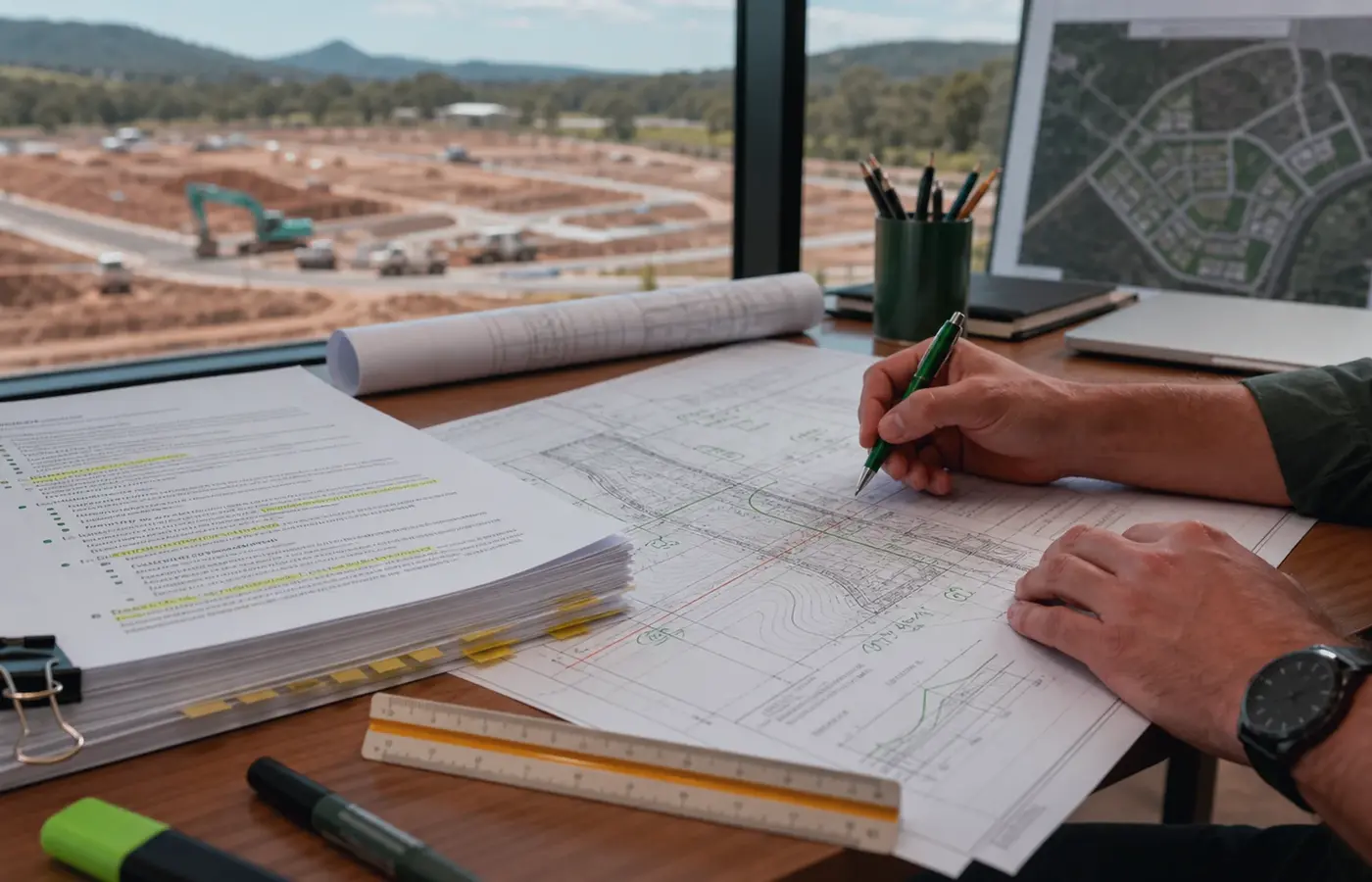
Concept illustration
Project question?
Check the civil constraints before committing to your next step.
Send CivilCity the address, current plans, approval stage and the issue you are trying to resolve. We will help scope the right civil engineering input for the project.
Quick answer
Before construction, review the decision notice line by line and turn civil conditions into design tasks, approval dependencies, inspection hold points and closeout evidence. Do this before tendering where possible, because the conditions can change scope, sequencing and who needs to provide information.
The review should answer four questions: what must be designed, what must be approved, what must be built and what must be proven at completion. CivilCity can help convert those questions into a practical condition register for Sunshine Coast subdivision and development projects.
Local Sunshine Coast context
Sunshine Coast approvals can include conditions dealing with stormwater, access, frontage works, earthworks, erosion control, plan sealing, service authority requirements and as-constructed records. Some are satisfied by drawings, some by construction actions and some by evidence collected after the works.
A decision notice should be read with the approved plans and current Council information. If the project has changed since approval, the team needs to confirm whether the change can be accommodated within the approval or requires a separate process.
Pre-construction decision table
Use this table to turn the decision notice into a delivery plan.
| Review item | Question to answer | Why it matters |
|---|---|---|
| Civil design conditions | Which conditions require drawings, calculations or reports? | Defines the operational works and design scope |
| Approval dependencies | What must be approved before works start? | Avoids building or civil works starting on the wrong assumption |
| Construction evidence | What inspections, tests or records must be collected? | Prevents missing proof at practical completion or plan sealing |
| Service authority items | Which water, sewer or external authority requirements sit outside Council? | Keeps network and connection matters in the programme |
| Changed proposal | Do current plans match the approved plans? | Identifies variation or redesign risk early |
Example: tendering from an approval
Consider a small subdivision with a decision notice that conditions driveway construction, stormwater detention, erosion control and as-constructed information. If the developer sends only architectural drawings to tender, contractors may price different assumptions and exclude key civil works.
A civil decision-notice review converts the conditions into a tender scope: drawings required, survey pickups, inspections, authority items and closeout documents. The tender can then distinguish construction price from unresolved design or approval risk.
Common mistakes
Do not treat the decision notice as a ceremonial document filed after approval. It is the instruction set for the next stage. Common failures include missing operational works triggers, assuming a planner has resolved technical civil matters, forgetting as-constructed evidence, or allowing a contractor to start before hold points are defined.
Another mistake is changing a layout after approval without checking civil consequences. A small boundary, driveway or level adjustment can alter stormwater, access, retaining or service requirements.
Checklist for your project brief
Prepare this package before asking for a civil review.
- Decision notice and full condition set.
- Approved plans, stamped drawings and any later concept changes.
- Current survey, service information and title/easement documents.
- Stormwater, access, earthworks, retaining and erosion-control assumptions.
- Tender or construction programme, including target start date.
- Known authority requirements and outstanding correspondence.
- Specific decision needed: scope, tender readiness, construction start or closeout plan.
When CivilCity should be involved
Involve CivilCity after approval and before tender or construction mobilisation. That timing gives the project team a chance to translate civil conditions into drawings, inspections, records and authority tasks before the site programme is locked.
CivilCity can help prepare the civil condition register, identify missing inputs and advise what should be resolved before operational works, tender, construction or plan sealing.
Common questions
Why review the decision notice before construction?
Because civil conditions can affect design, authority approvals, inspection evidence, construction sequencing and closeout. Missing them until site works start can cause redesign or delay.
Is a decision notice the same as construction approval?
No. It records the development decision and conditions. Depending on the project, further operational works approval, building approval, authority approvals or certificates may still be required.
Who should be part of the review?
The applicant or project manager should coordinate input from the planner, civil engineer, surveyor, architect, contractor and relevant service authorities.
What should CivilCity receive?
Send the decision notice, approved drawings, survey, condition package, construction programme, consultant reports and any proposed changes since approval.
Official sources and further guidance
- Sunshine Coast Council: operational work
- Sunshine Coast Council: plan sealing
- Sunshine Coast Council: development application forms
Use the current requirements for your property and proposal. Illustrative scenarios describe possible design issues; they are not reported client projects.
Discuss your project
Review civil conditions before construction
Send CivilCity the decision notice and approved plans so the civil delivery risks can be mapped before tender or site works.