
Due diligence - 24 June 2026
Subdivision feasibility checklist for Sunshine Coast property buyers
A buyer-focused Sunshine Coast subdivision feasibility checklist covering planning, overlays, access, stormwater, services and hidden civil costs.
Use the checklist before you fall in love with the site
Subdivision feasibility is easiest to assess before emotion, sunk cost and purchase pressure take over. The goal is not to prove the site works. The goal is to find the constraints early enough that you can price them properly or walk away.
On the Sunshine Coast, the first screen should combine planning controls with civil engineering reality: zoning and overlays on one side; access, stormwater, services and levels on the other.
Planning and mapping checks
Start with Sunshine Coast Council's Development.i site report and current planning scheme information. The report can help surface zoning, overlay information, applications and links to mapping layers. Nearby approvals in Development.i can also show how similar sites have been treated.
Look for minimum lot size expectations, local plan provisions, overlays, mapped infrastructure and any obvious history on or near the property. If the site has multiple overlays, do not treat them separately. Constraint stacking is often where feasibility gets tight.
Civil checks that change the numbers
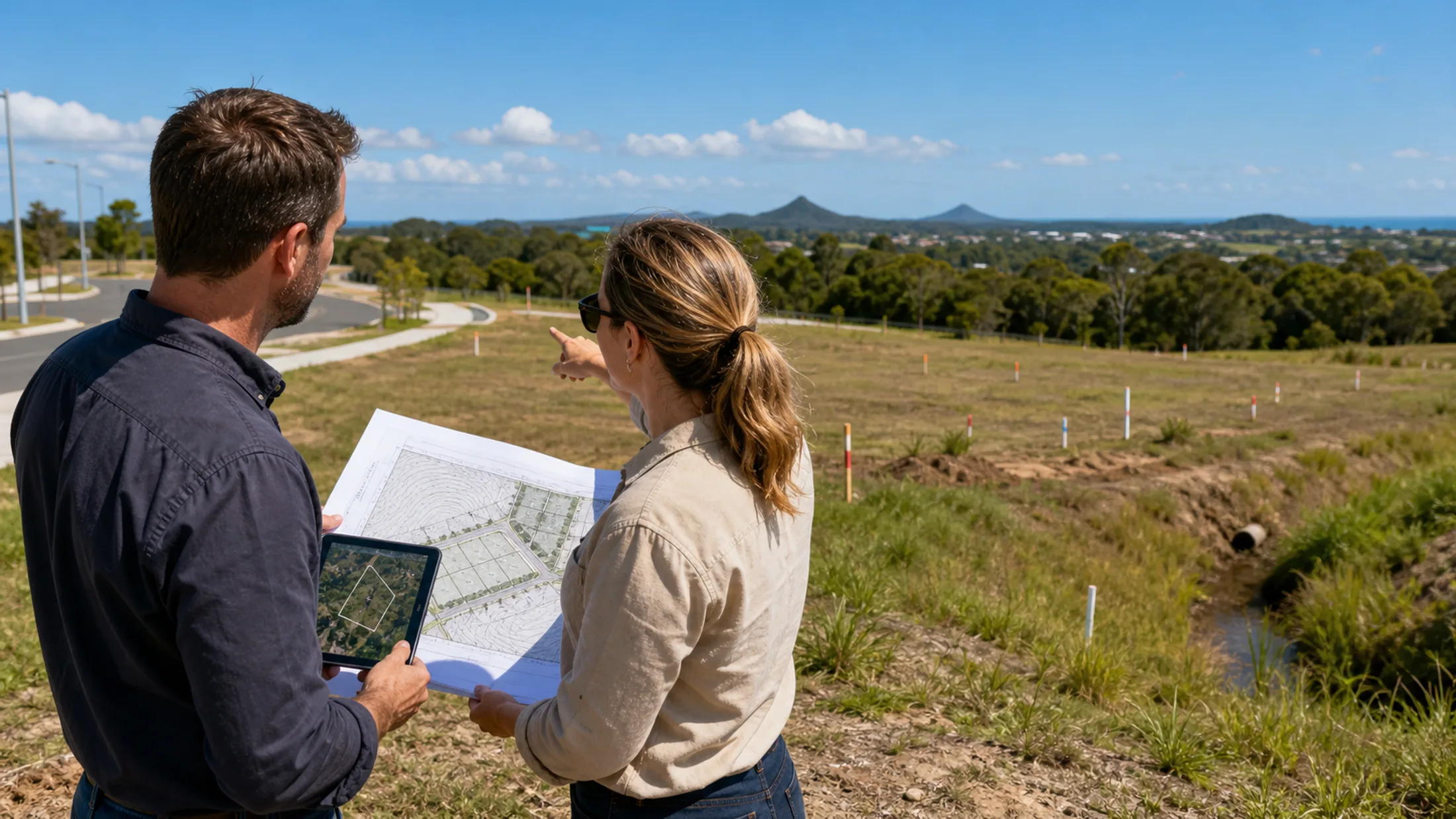
Review the frontage, likely driveway location, sight distance, slope from road to building area, stormwater discharge, sewer and water availability, existing easements and any apparent need for retaining walls. These items affect both approval risk and construction budget.
For rear lots and battle-axe concepts, access width, driveway grade, service corridors and drainage paths deserve extra attention. A long access handle can consume land area while also concentrating cost.
Documents to collect early
Useful early documents include the address, lot and plan details, title search, registered plan, any easement documents, survey if available, service records, previous approvals, flood or overlay mapping, and a rough sketch of the intended outcome.
You do not need a perfect design to start a feasibility discussion. You need enough information to test the most expensive assumptions.
Red flags for buyers
Be cautious with steep blocks, land below road level, sites without obvious drainage outlets, lots crossed by services or easements, narrow frontages, difficult intersections, flood overlay areas, and sites where nearby approvals show heavy conditions.
None of these issues automatically kill a project, but each can shift the negotiation. A site with known constraints may still work if the purchase price and development strategy reflect the risk.
How CivilCity can support due diligence
CivilCity can provide early engineering input for subdivision feasibility, including access, stormwater, servicing, earthworks and constructability observations. The aim is to give buyers a clearer risk picture before they commit.
For small and medium developers, this can be the difference between buying a site with eyes open and inheriting a problem that was visible from the start.
FAQ
Common question
Why do buyers need a subdivision feasibility checklist?
Because a property can look developable in a listing but carry hidden constraints in access, stormwater, easements, services, overlays or earthworks that affect cost, yield and approval risk.
Can this checklist replace town planning advice?
No. It helps you ask better early questions. A subdivision should still be checked by the right consultant team, including planning, survey and civil engineering input.
What is the biggest hidden civil risk?
Stormwater discharge and access are often the big ones. If water cannot leave the site lawfully, or vehicles cannot enter and exit safely, the layout may need a major rethink.
Useful official resources
Need project-specific civil advice?
Send CivilCity the project location, approval stage and the issue you need resolved.
Contact CivilCity