
Stormwater - 24 June 2026
Stormwater design on the Sunshine Coast: what developers need to know
A practical Sunshine Coast stormwater design guide for developers covering lawful discharge, overland flow, detention, flooding, levels and approval risk.
Short answer
Stormwater design is one of the biggest feasibility issues for Sunshine Coast development sites. It affects where water goes, how levels are set, whether detention is needed, how driveways grade, and whether neighbouring land or downstream infrastructure may be affected.
For developers, stormwater should be checked early, not after the architectural layout is finished.
Why stormwater shapes the site
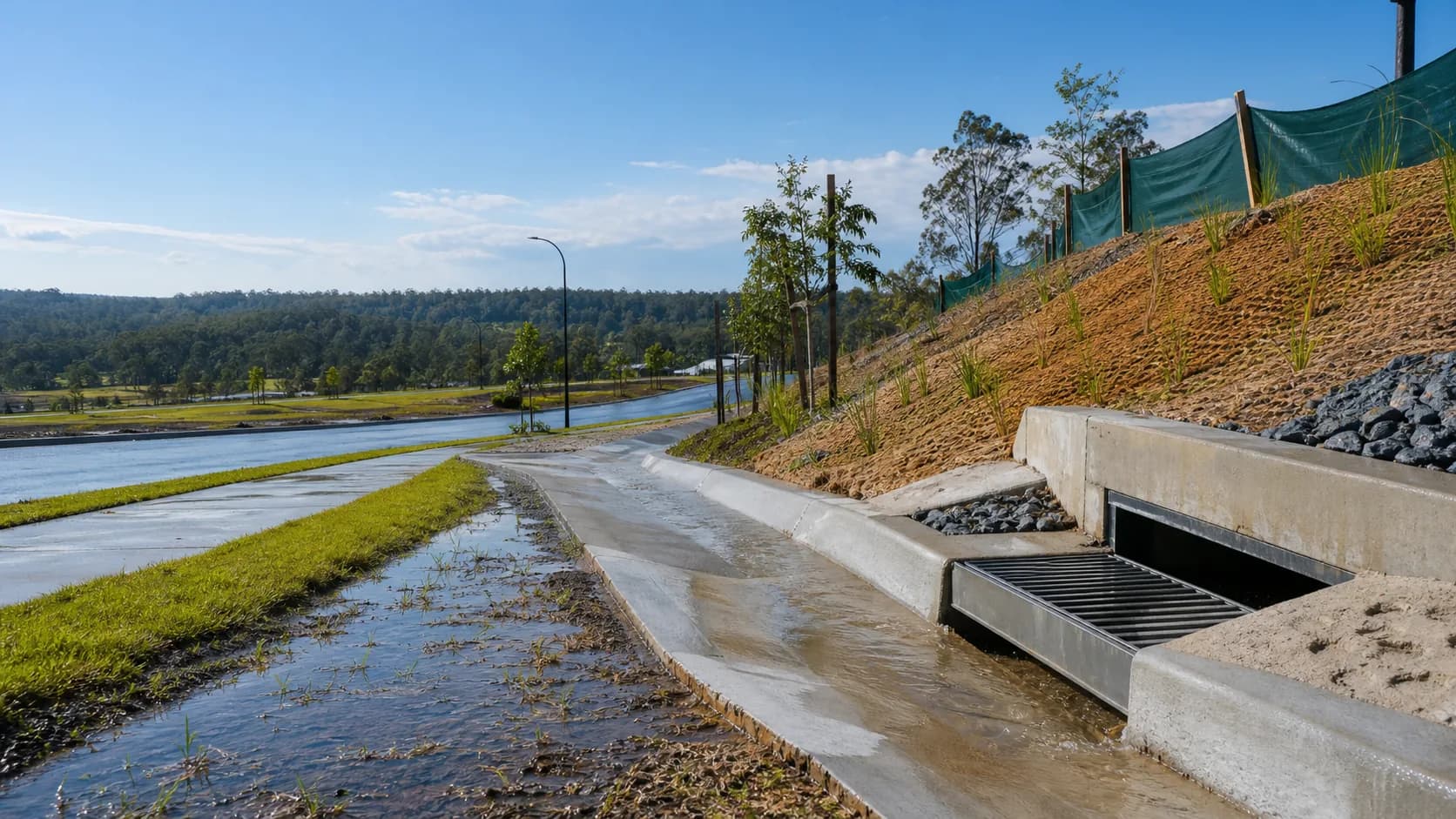
Stormwater is not just pipe sizing. It includes lawful discharge, overland flow, flood constraints, detention, water quality treatment, roofwater, surface grading, pits, pipes, easements and downstream impacts.
A project can lose yield if stormwater needs a drainage easement, detention tank, basin, level change or larger service corridor than expected.
Local Sunshine Coast context
Sunshine Coast sites can include steep land, coastal conditions, flood overlays, older infill drainage, sensitive downstream environments and constrained road frontages. Council mapping and Development.i site report information can help identify flooding overlays, general property information and links to relevant mapping.
The key is to confirm what applies to the actual site, not assume that a nearby project had the same drainage answer.
Questions to answer early
Where can stormwater lawfully discharge? Does water currently flow through or across the site? Is there an overland flow path? Are there existing drainage easements or pits? Does the road frontage have usable drainage infrastructure? Will levels allow gravity drainage? Could detention or treatment be required?
If these questions are unanswered, the layout is still carrying stormwater risk.
Common developer mistakes
The common mistake is leaving stormwater until the end and expecting it to fit around a fixed layout. Another is assuming the lowest corner of the site is a lawful outlet. A third is missing the connection between driveway grade, building levels and drainage falls.
Good stormwater design starts with levels and discharge, then coordinates with access, services and buildability.
How CivilCity helps
CivilCity can review stormwater feasibility, prepare drainage concepts, support development applications and develop detailed stormwater design for operational works or construction.
For early advice, send the site address, survey if available, proposed layout, any known flood or drainage constraints and the development outcome you are testing.
FAQ
Common question
Should stormwater be checked during feasibility?
Yes. Stormwater can affect yield, levels, driveway design, building placement, easements, detention requirements and whether a site is commercially workable.
What is a lawful point of discharge?
It is the practical and legal point where stormwater from the site can discharge. If it is unclear, the whole site strategy may need more investigation.
Does every development need stormwater detention?
Not necessarily. Requirements depend on the site, catchment, downstream conditions, proposed development and applicable approval or design requirements.
Useful official resources
Need project-specific civil advice?
Send CivilCity the project location, approval stage and the issue you need resolved.
Contact CivilCity