
Operational works · Sunshine Coast
How to translate approval conditions into operational works drawings on the Sunshine Coast
How Sunshine Coast developers turn civil approval conditions into operational works drawings, evidence, consultant tasks and construction-ready decisions.
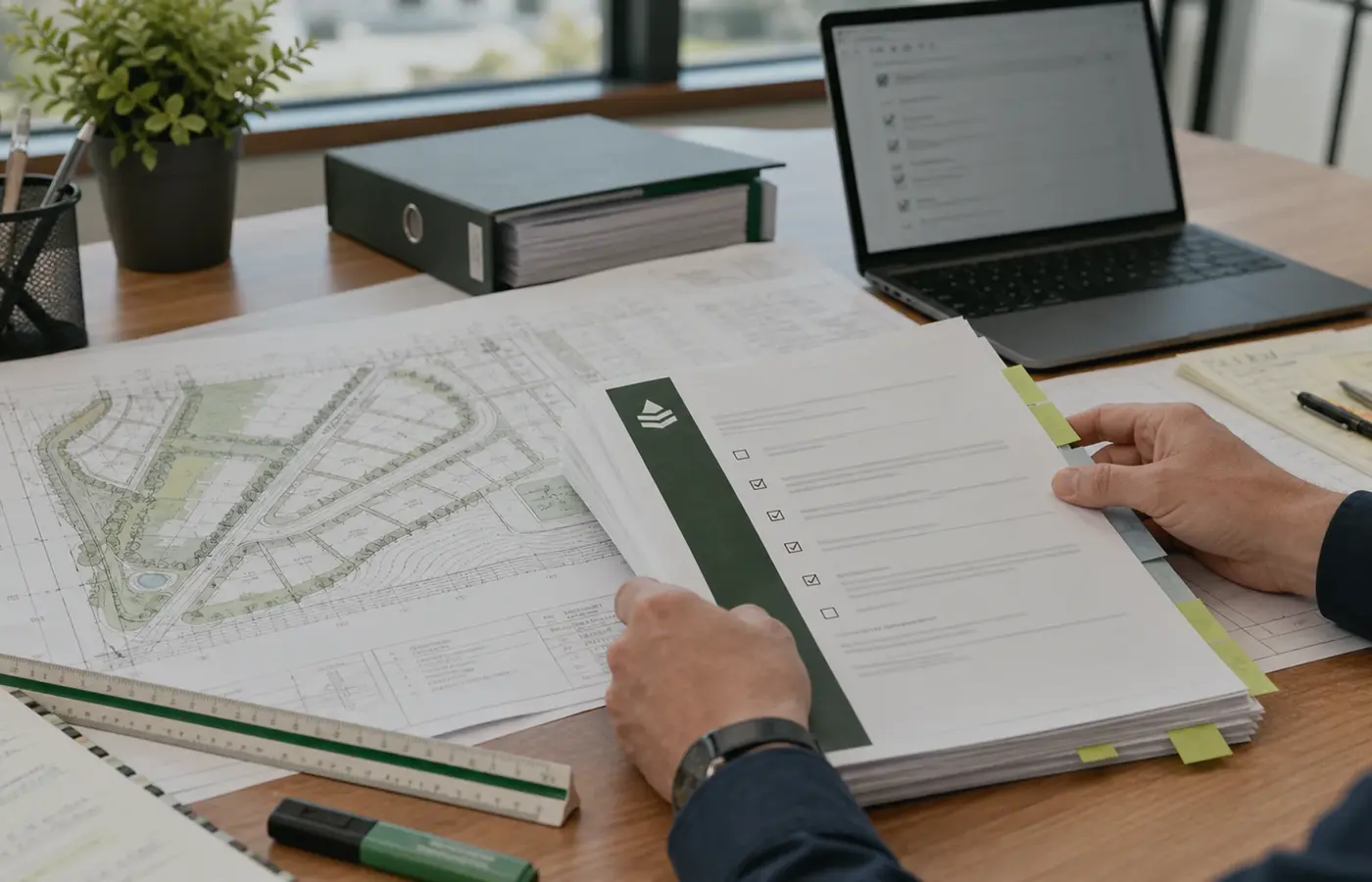
Concept illustration
Project question?
Check the civil constraints before committing to your next step.
Send CivilCity the address, current plans, approval stage and the issue you are trying to resolve. We will help scope the right civil engineering input for the project.
Quick answer
Approval conditions become operational works drawings by being converted into a condition register, scoped into civil design tasks and checked against the approved layout, survey, stormwater strategy, access design, service requirements and construction sequence. A good operational works package shows how the conditioned infrastructure will be designed and delivered, not just that a condition exists.
The practical decision is whether the project is ready to brief detailed civil design, or whether key inputs are still missing. CivilCity can review the conditions early, identify drawing obligations and separate civil design items from planning, survey, landscape, utility and construction responsibilities.
Local Sunshine Coast context
Sunshine Coast Council's operational work guidance treats operational work as a separate application pathway for certain works such as filling and excavation, road work, stormwater infrastructure, access and related civil works. A subdivision or development approval may therefore be only the start of the civil delivery path.
Council assessment is tied to the specific approval, conditions and site. The same condition wording can have different practical consequences on a flat infill lot, a sloping battle-axe block, a constrained frontage or a site with downstream drainage uncertainty. Start with the actual decision notice rather than a generic drawing list.
Condition translation table
Use this table to sort approval conditions before commissioning drawings.
| Condition type | Likely civil output | Risk if missed |
|---|---|---|
| Stormwater management | Drainage layout, calculations, discharge evidence and treatment details | Late redesign if the outlet or level strategy does not work |
| Access and frontage works | Driveway, long section, road interface and construction details | Grades, sight distance or tie-ins conflict with the approved layout |
| Earthworks and retaining | Finished levels, cut/fill, retaining interface and erosion controls | Building pads, drainage and boundaries stop aligning |
| Services and easements | Service coordination plan and authority-dependent notes | Infrastructure clashes or maintenance access is lost |
| Construction and closeout | Inspection, testing, as-constructed and certification requirements | Plan sealing or practical completion is delayed |
Example: conditions before detailed design
Consider a small subdivision approval with conditions for stormwater discharge, driveway construction, frontage works and as-constructed records. The team could ask for drawings immediately, but that may hide missing inputs. A better first step is a condition workshop: confirm survey currency, identify the stormwater outlet, check whether the frontage levels are adequate and list the authority items that sit outside Council's decision.
If the stormwater outlet is unresolved, the design programme changes. If frontage levels are workable but survey is incomplete, the next action is targeted survey. If the approved layout conflicts with access grades, the planner and surveyor may need to revisit the layout before operational works is lodged.
Common mistakes
The expensive mistake is treating conditions as administration after the real approval has been won. Civil conditions can change drawing scope, consultant timing, tender readiness and closeout evidence. Another mistake is sending the civil engineer only the endorsed layout and omitting the decision notice, referral responses and service correspondence.
Teams also lose time when each consultant answers conditions separately. Operational works drawings depend on survey, planning, landscape, geotechnical and utility inputs. If those inputs are not reconciled, the application can attract information requests or carry unresolved problems into construction.
Checklist for your project brief
Send CivilCity a complete condition package before detailed civil design is scoped.
- Decision notice, approved plans and every civil-relevant condition.
- Current feature and level survey, including frontage and drainage information.
- Stormwater concept, lawful discharge assumptions and downstream evidence.
- Access, parking, turning and frontage obligations.
- Service authority correspondence, easements and title constraints.
- Geotechnical, retaining, landscape and erosion-control inputs if available.
- Your programme target: lodgement, tender, construction start or plan sealing.
When CivilCity should be involved
Involve CivilCity as soon as the approval conditions are received, before consultants start producing disconnected drawings. CivilCity can prepare a condition-to-deliverable review, scope the operational works package, identify missing evidence and help the project team avoid late design surprises.
The primary destination for this work is operational works support. Send the decision notice and plans so the civil scope can be matched to the real approval rather than guessed from the project title.
Common questions
Should every approval condition appear on an operational works drawing?
No. Some conditions become drawings, some become reports, certificates, authority correspondence, survey evidence or construction obligations. The first task is to sort each condition into the right deliverable.
Can CivilCity start before every consultant has finished?
Often yes, if the scope is clear and the missing inputs are tracked. Survey, stormwater, road frontage, services, landscaping and geotechnical inputs still need to be coordinated before the package is relied on for lodgement or construction.
Does an operational works approval mean construction can ignore the original development approval?
No. The operational works package should respond to the relevant development approval, conditions and endorsed plans. Changes during design or construction need to be checked against the approval pathway.
What should I send for a condition-to-drawing review?
Send the decision notice, approved plans, conditions, survey, civil sketches, service information, consultant reports and any Council or authority correspondence.
Official sources and further guidance
- Sunshine Coast Council: operational work
- Sunshine Coast Council: development application forms
- Sunshine Coast Planning Scheme 2014
Use the current requirements for your property and proposal. Illustrative scenarios describe possible design issues; they are not reported client projects.
Discuss your project
Turn approval conditions into a civil delivery scope
Send CivilCity the decision notice, approved plans and survey so the operational works drawings can be scoped around the real conditions.