
Due diligence - 23 September 2026
Development site due diligence Sunshine Coast: civil checks before you buy
A buyer-focused civil engineering due diligence guide for Sunshine Coast development sites, covering access, stormwater, services, easements, slope and hidden costs.
Quick answer
Before buying a Sunshine Coast development site, check the civil engineering issues that can change yield, approval risk, construction cost and programme. The big ones are access, stormwater, services, easements, slope, overlays and buildability.
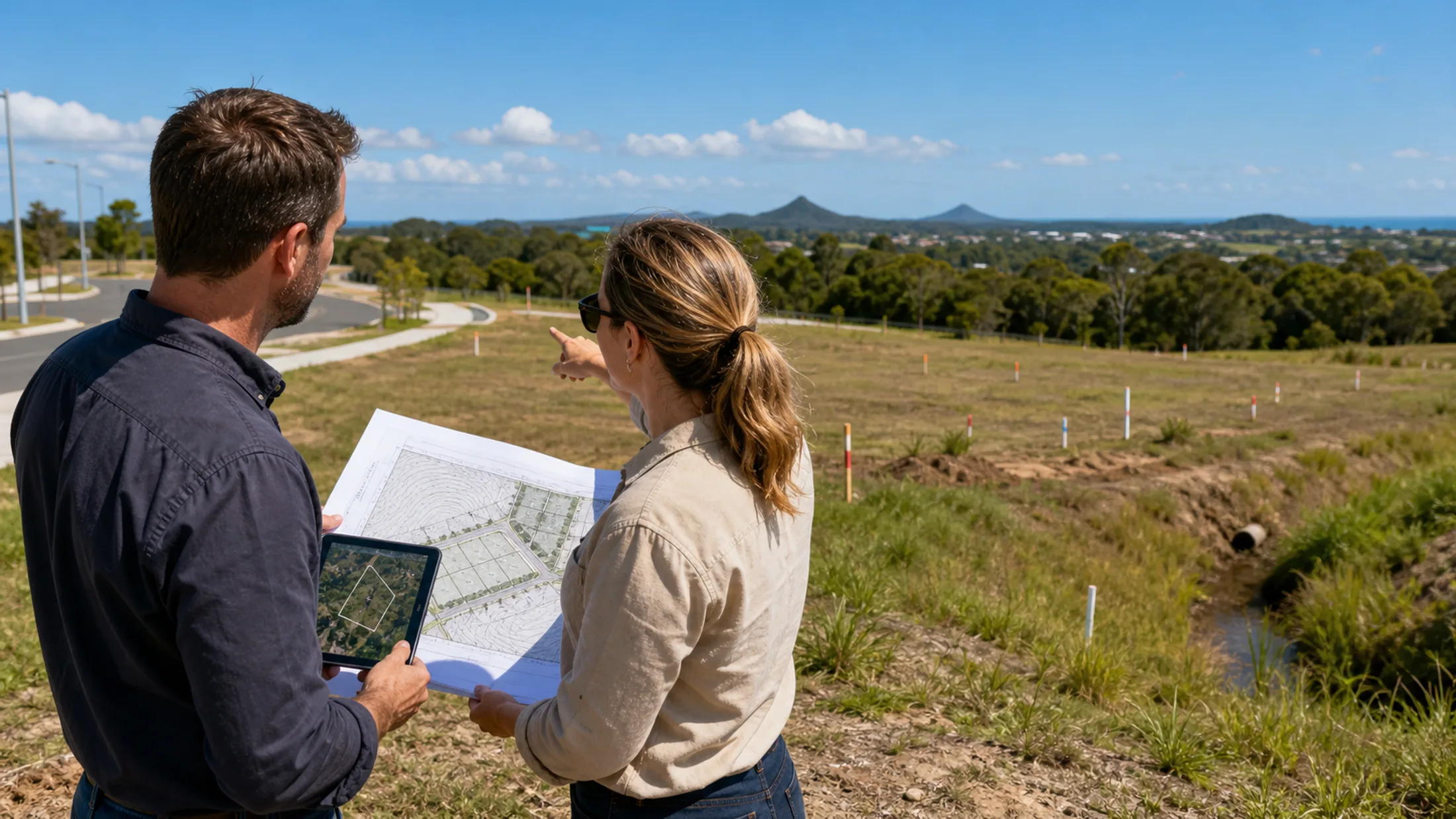
A site can look attractive in a listing and still be a poor development deal if the driveway cannot work, stormwater has no practical outlet, sewer is hard to reach, or the best building area is consumed by overlays, retaining or easements.
The due diligence checks that protect margin
Good due diligence should produce a decision, not a folder of screenshots. It should tell you what appears workable, what needs further evidence, what could affect price and what assumptions should be written into the feasibility model.
Start with council information, planning scheme mapping, title documents, nearby approvals and visible site constraints. Then test how those constraints affect the development outcome you actually want.
| Check | Evidence to seek | Decision it informs |
|---|---|---|
| Access | Frontage, sight distance, grades and existing driveway options | Can the proposed use or lot layout function safely? |
| Stormwater | Outlet, levels, overland flow, easements and downstream route | Can the site drain without killing yield? |
| Services | Water, sewer, electricity and likely extension points | Will connections be simple or expensive? |
| Slope and earthworks | Survey levels, retaining risk and building envelopes | Will the site need costly walls, fill or redesign? |
| Overlays and easements | Planning mapping, title, survey and site report | What land is constrained before design starts? |
What buyers often miss
Buyers often focus on zone, lot size and headline yield. Those are important, but civil constraints decide whether the yield can be built at a price that still makes sense.
The hidden risks are usually practical: a low rear lot that cannot drain by gravity, a narrow frontage that fails access, an easement through the best building pad, an old sewer crossing the site, or a retaining wall that was never in the agent's feasibility.
A practical pre-purchase process
First, define the intended outcome: subdivision, townhouse, dual occupancy, commercial use or land banking. Second, screen the public planning and development information. Third, test access, drainage, services, slope and easements against that outcome. Fourth, identify what needs survey, planning, hydraulic, geotechnical or other specialist evidence.
The best output is a short risk note that separates deal breakers from manageable design issues. That helps the buyer negotiate price, adjust the concept, extend due diligence or walk away before sunk cost takes over.
When CivilCity should be involved
Bring CivilCity in before going unconditional where the site value depends on development potential. A fast civil review can help you understand whether the project needs more investigation or whether the civil risk is already obvious enough to affect the offer.
CivilCity can review Sunshine Coast development sites for access, stormwater, services, slope, easements, overlays, likely operational works and construction-cost risk, then coordinate with your planner, surveyor or designer on the next step.
FAQ
Common question
What should development site due diligence check?
At minimum, check access, stormwater discharge, services, easements, slope, flood or overlays, road frontage, earthworks, retaining, constructability and likely approval-condition risk.
Should due diligence happen before making an offer?
Ideally yes, or at least before the contract becomes unconditional. The aim is to identify cost and yield risks while the buyer can still negotiate, redesign or walk away.
Can a desktop review replace survey?
No. A desktop review is useful for early screening, but survey and site-specific design evidence are needed before relying on levels, boundaries, drainage and buildability.
What should I send CivilCity for a first review?
Send the address, title or lot plan, listing or contract timing, proposed development outcome, survey if available and the specific decision you need to make.
Useful official resources
Need project-specific civil advice?
Send CivilCity the project location, approval stage and the issue you need resolved.
Contact CivilCity